Wednesday, May 27, 2015

China to the Moon...

Perhaps they're looking for the monolith?
-Daniel aka Obsidian


Why China wants to land a spacecraft on the mysterious far side of the moon
Updated by Joseph Stromberg on May 27, 2015, 9:40 a.m. ET @josephstromberg joseph@vox.com
China's previous lunar rover, Yutu, landed in 2013 and was photographed by the Chang'e 3 lander as it drove away. (Chinese Academy of Sciences)
China appears to be planning a space mission to a place no nation has ever been — the far side of the moon.
The China National Space Administration (CNSA) currently plans to launch Chang'e 4, a craft that will carry the country's second lunar rover, in 2020. According to comments recently made by Wu Weiren, the Lunar Exploration Program's chief engineer, the rover will likely touch down on the side of the moon that faces away from Earth.
"We probably will choose a site on which it is more difficult to land and more technically challenging," Wu recently told the state broadcaster CCTV. "Other countries have chosen to land on the near side of the moon. Our next move probably will see some spacecraft land on the far side of the moon."
Since 2007, China's ambitious lunar program has already placed two probes in the moon's orbit and one lander on its surface. Putting a rover on the far side could provide new data on the moon's geologic history — and demonstrate the CNSA's growing expertise in and dominance of lunar exploration.
China's ambitious lunar exploration program

The Chang'e 3 lander, which touched down on the moon in 2013. (Chinese Academy of Sciences)
Though China began launching satellites and conducting other activities in space all the way back in the 1970s, the country's space agency has made its biggest strides since 2000, becoming the third nation to send astronauts into space in 2003. Since then, the CNSA has focused on a destination that NASA and other space agencies have mostly overlooked as of late: the moon.
In 2007, the CNSA sent its first spacecraft — named Chang'e 1, after the Chinese goddess of the moon — into lunar orbit. That was followed by the orbiter Chang'e 2 in 2010 and the lander Chang'e 3 in 2013, the latter of which brought a small rover (called Yutu) to the moon, and became the first craft to make a soft-landing there since the 1970s.
yutu
A close-up of Yutu, the rover carried to the moon by Chang'e 3 in 2013. (Chinese Academy of Sciences)
The next few missions will go even further. Chang'e 5, to be launched in 2017, will collect a rock sample and launch it back up to an orbiter, in order to bring it back to Earth. (Confusingly, Chang'e 5 is launching before Chang'e 4 because the latter was originally built as a backup to Chang'e 3, then sat in storage for a few years and has since been retrofitted for the new mission.)
Plans call for Chang'e 4 to launch in 2020. Though Chang'e 3 successfully landed, mechanical problems prevented the rover it carried from traveling more than 100 meters. If all goes as planned, the new craft's rover will be able to gather much more data — and perhaps explore the moon's relatively unknown far side.
The mysterious far side of the moon
tidal locking
Because the moon rotates at the same rate it orbits the Earth, it's tidally locked, as shown at left — and the same side always faces Earth. If it didn't rotate, we'd see both sides equally, as shown at right. (Stigmatella aurantiaca)
From Earth, we always see one side of the moon because it's tidally locked: it rotates at the same speed that it orbits us.
As a result, we know much less about the far side (calling it the "dark side," while a bit more poetic, isn't really accurate, because it gets just as much sunlight). And because there's no direct line of sight from the Earth to the far side, landing a craft there would require all communications to be routed through an orbiter before reaching the lander.
But as difficult as it sounds, a mission to the far side would yield plenty of rewarding data. Though the moon's entire surface has been extensively photographed by orbiting probes — starting with the USSR's Luna 3, in 1959, and currently by NASA's Lunar Reconnaissance Orbiter — no lander or rover has ever documented the far side up close.
far side of the moon
The moon's near side (left) has far more dark basaltic plains than the far side (right). (NASA/GSFC/Arizona State University)
We already know the near side of the moon is covered in dark spots, which are plains of basalt that formed after volcanoes erupted billions of years ago and their lava cooled.
The far side is different: it has few dark spots and lots of craters, though scientists don't fully understand why. It may be that underneath its surface, there were never as many volcanoes, but that explanation still isn't fully proven. Chang'e 4 might tell us more, by collecting data on the rock that covers the far side's surface.
Depending on where the rover is sent, it could also provide some information on the moon's interior. The far side features the giant South Pole–Aitken basin — a huge crater in which the crust might be so thin that mantle rock peeks through. Data on this rock could help scientists better understand the layers that make up the moon.

Mantle material might be accessible in the South Pole-Aitken basin, on the southern end of the far side. (JAXA)
Finally, there's some speculation that China might be interested in visiting the moon's far side and conducting sample-return missions for an entirely different purpose: harvesting helium-3, an isotope of helium that could someday be used for both nuclear weapons and energy production.
The isotope is much more abundant on the moon than on Earth, where it's extremely rare. And the moon's far side is believed to have the highest concentrations of it, because it's exposed to much more solar wind, which deposits helium-3 in the first place.
It's not certain that this is China's goal. In order to get usable quantities of helium-3, a craft would need to harvest way more rock than Chang'e 5 will be capable of doing. The CNSA, meanwhile, has never explicitly said that it's planning on mining helium-3.
Still, Ouyang Ziyuan, chief scientist of CNSA's Lunar Exploration Program, has previously mentioned helium-3 as a long-term potential benefit of the Chang'e program. It's conceivable that one reason for returning lunar samples and exploring the moon's far side is to collect initial data needed for this sort of ambitious extraction project.


Thursday, May 21, 2015

Apollo 11 and UFO Encounter...

As I promised one of my Facebook friends, i am posting the actual interview with Apollo Astronaut Buzz Aldrin, concerning the documented UFO he & his flight companions witnessed on their famous journey. It took me a minute to scare it up for your viewing. So,here it is.
-Daniel aka Obsidian.

 https://www.youtube.com/watch?v=XlkV1ybBnHI

 https://youtu.be/XlkV1ybBnHI


Monday, April 06, 2015

Before Christ...

Hope all had a great Easter/Passover. Oh! BTW as always I have 2 b provocative. So, i'll leave u with a little Meso-American history & the reason why the Aztec natives saw no reason to adopt the Spaniard's version of the crucified Christ. As u can plainly see: THEY ALREADY HAD ONE named Quetzalcoatl for thousands of years.
-Daniel aka Obsidan


Thursday, April 02, 2015

Happy Birthday Marguerite!...

& on this day, 28 years ago, my daughter, Marguerite Daniele Canada was born. Here's the scoop! She was supposed to arrive April 1st (which would've made her an "April Fools" baby). But she was smarter than us & waited until 12:40 am, April 2nd to come into the world. I love you always, my dearest daughter, Marguerite. may you always be blessed!
-Daniel aka Obsidian

Monday, February 16, 2015

A Must See Interview...

A marvelous interview with Dr. J. Allen Hynek on UFOs. A must see.
-Daniel aka Obsidian


Friday, February 13, 2015

More Hardcore UFO Evidence...

Dr. J. Allen Hynek (past Chairman of the Astronomy Department of Northwestern University) served as the scientific consultant to US Air Force's official UFO investigation, initially the secret Project SIGN and later the well-known Project "Blue Book". He did field-investigations and talked to claimed UFO eye-witnesses for 2 decades (between 1948-1969). Starting out as a skeptic, who tried to "explain away" the phenomenon (in an attempt to explain the Michigan 1966 sightings, Hynek came up with the infamous "swamp gas" idea, which became something of a national joke), he later became convinced of the UFO reality and admitted that Project Blue Book had misled the public. His work and findings were used by Director Steven Spielberg for the movie "Close Encounters of the Third Kind."

-Daniel aka Obsidian


Thursday, February 12, 2015

More UFO Evidence...

Some UFO evidence with four-way confirmation: ground visual, ground radar, airborne visual and airborne radar -- as early as 1950s, watch LtCol Brown NPCC 2001 testimony, who worked in the US Air Force's Office of Special Investigations on project Grudge, the precursor to Project Bluebook. Such radar/visual UFO are considered by experts as being worth further investigation.

-Daniel/Obsidian


Testimony from Credible Witnesses...

Ufo Testimony, supported by declassified documents from the US National Archives, US Navy pilot Cmdr Graham Bethune describes the encounter with a huge 90m (300ft) discoid UFO in 1951 on the way back from a classified mission to Iceland: "We had 31 people [relief crews] on board and a psychiatrist, plus the crew. We all witnessed it"

I invite you all to check it out! 
-Daniel/Obsidian


Friday, January 30, 2015

A Tribute to One of the 20th Century's Greatest Scientist...


Dr. J. Allen Hynek - Brief Biography          
Summary: A brief biography of Dr. J. Allen Hynek, the father of scientific ufology.


Dr. J. Allen Hynek (1910-1986)

Dr. Hynek was born in Chicago in 1910. He received bachelor and doctorate of science degrees in physics and astronomy from the University of Chicago in 1931 and 1935 respectively. While working on his doctorate he was a fellow of the Yerkes Observatory in Williams Bay, Wisconsin.

From 1936 to 1941, Dr. Hynek was an instructor and assistant professor of physics and astronomy at Ohio State University. From 1941 to 1946 he supervised technical reports in applied physics at John Hopkins University. He went back to Ohio State in 1946 to become a full professor in physics and astronomy.

For five years ending in 1960, Dr. Hynek was associate director of the Smithsonian Institution’s Astrophysics Observatory in Cambridge, Massachusetts. He was head of the optical satellite tracking program. During this period he lectured at Harvard University.

Dr. Hynek became the Chairman of the Astronomy Department and director of the Dearaborn Observatory at the Evanston campus of Northwestern University. His specialty was the chemical composition of he stellar atmosphere. He pressed very hard for Northwestern to procure a modern astronomical telescope in order to spare students extensive travel to do advance research. He retired from teaching in 1973.

His legendary career in the study of UFO phenomena began in 1948 at Ohio State when he was asked by the Air Force to act as astronomical consultant to Project Blue Book - a role he carried out for 20 years. In 1966, after a rash of sightings in Michigan, he went to the area to take charge of the investigation. After interviewing scores of people he ascribed certain sightings to luminous marsh gas rather than something from space. In a wonderful example of irony, the infamous "swamp gas" flap had a major impact on the level of skepticism toward government investigations and prompted many amateurs to become citizen investigators.

In due course Dr. Hynek became disenchanted with the intentions and methodology of the Air Force. When Project Blue Book was closed, he voiced this concern, continued his work privately and eventually founded the Center for UFO Studies (CUFOS) in 1973. By then Dr. Hynek had executed a 180 degree turn in his views on the subject - one of the most famous such reversals in history.

Dr. Hynek wrote several books and published the International UFO Reporter. It was he who formulated the encounter classification scheme made famous in Close Encounters of the Third Kind.

A reporter once suggested to him he might be remembered not as an astronomer but as the man who made UFOs respectable. He replied, "I wouldn’t mind. If I can succeed in making the study of UFOs scientifically respectable and do something constructive in it, then I think that would be a real contribution."

He died of a brain tumor on April 27, 1986.

Were it not for the challenging (to the mainstream community) content of the science of this phenomena, Dr. J. Allen Hynek would already be widely recognized as one of the most important scientists of the twentieth century.

Content assistance from CUFOS

Personal Note: This author heard Dr. Hynek speak at a small gathering in Denver, Colorado just a month or two before he died. He was obviously not well and had difficulty formulating his thoughts. He did not mention his illness and persevered to give a fine presentation of the state of the evidence at that time. He worked up until the last moment because he believed in what he was doing and knew he was right.

I have dedicated this website to him and all the others researchers who refused to be dissuaded from going where others fear to thread. They are collectively the Galileo of our time.

Wednesday, January 21, 2015

On MLK...

OK. To my friends out here, who doubt the veracity of the  claim that the late Dr. Martin Luther King's assassination was NOT a conspiracy/cover-up, I have gone through the pains of scaring up this video-with the evidence presented. Please take the time to view it & i welcome any feedback/comments from you on the subject. Bon Appetito!
 -Daniel aka Obsidian


Monday, January 19, 2015

Scientific Update!...

Indeed we are just beginning to scratch the surface of scientific discovery!
-Daniel aka Obsidian


Two more planets in our Solar System, say astronomers


AFP

Researchers suggest that "at least two" planets lie beyond Pluto
.
View photo

Researchers suggest that "at least two" planets lie beyond Pluto (AFP Photo/)

Paris (AFP) - The Solar System has at least two more planets waiting to be discovered beyond the orbit of Pluto, Spanish and British astronomers say.

The official list of planets in our star system runs to eight, with gas giant Neptune the outermost.
Beyond Neptune, Pluto was relegated to the status of "dwarf planet" by the International Astronomical Union in 2006, although it is still championed by some as the most distant planet from the Sun.

In a study published in the latest issue of the British journal Monthly Notices of the Royal Astronomical Society, researchers propose that "at least two" planets lie beyond Pluto. Their calculations are based on the unusual orbital behaviour of very distant space rocks called extreme trans-Neptunian objects, or ETNOs.

In theory, ETNOs should be dispersed in a band some 150 Astronomical Units (AU) from the Sun.
An AU, a measurement of Solar System distance, is the span between Earth and the Sun -- nearly 150 million kilometres (almost 93 million miles).

ETNOs should also be more or less on the same orbital plane as the Solar System planets. But observations of about a dozen ETNOs have suggested a quite different picture, the study says.
If correct, they imply that ETNOs are scattered much more widely, at between 150 and 525 AU, and with an orbital inclination of about 20 degrees.

To explain this anomaly, the study suggests some very large objects -- planets -- must be in the neighbourhood and their gravitational force is bossing the much smaller ETNOs around. "This excess of objects with unexpected orbital parameters makes us believe that some invisible forces are altering the distribution" of the ETNOs, said Carlos de la Fuente Marcos of the Complutense University of Madrid.

"The exact number is uncertain, given that the data we have is limited, but our calculations suggest that there are at least two planets, and probably more, within the confines of our Solar System," the Spanish scientific news agency Sinc quoted him as saying.

"If it is confirmed, our results may be truly revolutionary for astronomy."

So far, there is no direct evidence to substantiate the theory.

Marcos's team, which includes astrophysicists at the University of Cambridge, devised a model based on changes previously observed in the orbit of a comet called 96P/Machholz 1 when it came near Jupiter, the biggest planet in the Solar System.

Based on this model, the movement of the ETNOs was consistent with one planet at nearly 200 AU and another at about 250 AU, they said. Last year, the ALMA advanced telescope, located in Chile's bone-dry Atacama desert, found that planets in other star systems can form hundreds of AU from their sun.

Neptune orbits at an average distance of about 30 AU, and Pluto, which has a highly eccentric orbit, circles the Sun at an average of about 40 AU.

Tuesday, January 06, 2015

Roseanne Barr Speaks out about Hollywood...

I used to think she was a complete looney. However, after watching this video I have to agree & to say, sometimes it pays to listen to Roseanne Barr, and/or women like her. Check it out!
-Daniel aka Obsidian


Sunday, December 28, 2014

Another flight lost @ Sea...

I hate to say it happened again, but, unfortunately, I have to say so. Something is terrible amiss with these foreign flights! (let's just hope they find some of the passingers & crew alive)...
-Daniel aka Obsidian

Search for missing AirAsia jet #QZ8501 bound for Singapore from Indonesia suspended

WHAT WE KNOW SO FAR:
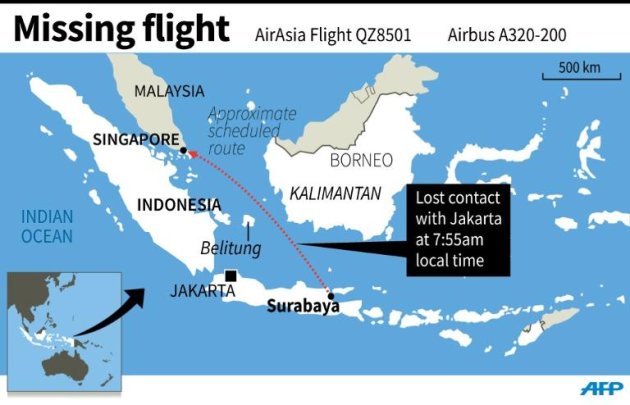
- AirAsia flight QZ8501 bound for Singapore from Surabaya, Indonesia and carrying 162 people on board went missing Sunday morning.
- Contact with the plane was lost around an hour after departure, somewhere over the Java Sea between Belitung island and Pontianak, on Indonesia's part of Kalimantan island.
- Search and rescue operations were launched with the Indonesian army as well as Singapore and Malaysia scouring the area around Belitung, but have been suspended for the night.

Indonesia air traffic control lost contact with AirAsia flight QZ8501 bound for Singapore from the Indonesian city of Surabaya on Sunday morning.

Search and locate efforts were launched but Indonesia later suspended the operation as darkness fell. The national search and rescue agency said the operation will resume at first light on Monday morning, with the search area expanded to include mountainous areas on land.
Earlier, AirAsia released a statement listing 162 people on board, with 138 adults, 16 children and one infant making up 155 passengers along with seven crew members (two pilots, four flight attendants and one engineer).

The passengers comprise one Singaporean, one Malaysian, one British, three South Koreans and 149 Indonesians, while the crew consists of six Indonesians and one French (the co-pilot). See the full manifest here.

The Civil Aviation Authority of Singapore (CAAS) confirmed that the Singaporean on board the missing flight is a two year-old girl travelling with her father, the British national.

A Changi Airport staff holds up a sign to direct possible next-of-kins of passengers of AirAsia flight QZ 8501 from Indonesian city of Surabaya to Singapore, at Changi Airport in Singapore December ... more 


QZ8501 lost contact with Indonesian air traffic control at 7:55am local time, 42 minutes after departure and an hour before it was scheduled to land in Singapore.

Reuters reports that the aircraft was between the Indonesian port of Tanjung Pandan and the town of Pontianak, in West Kalimantan on Borneo island, when it went missing without a distress signal.
The plane was on the submitted flight plan route before it asked for permission to deviate to avoid "bad weather" described by officials as dense storm clouds, strong winds and lightning.

"The plane requested to the air traffic control to fly to the left side which was approved, but their request to fly to 38,000 feet level from 32,000 feet could not be approved at that time due to a traffic, there was a flight above, and five minutes later the flight disappeared from radar," said an Indonesian air transport official.


Map locating the scheduled flight AirAsia QZ8501, which went missing on Sunday morningMap locating the scheduled flight AirAsia QZ8501, which went missing on Sunday morning


The captain in command had a substantial total of 6,100 flying hours and the first officer a total of 2,275 flying hours, said AirAsia, adding that the jet underwent its last scheduled maintenance on 16 November 2014.
Air Asia chief Tony Fernandes confirmed the plane had been given the all-clear by aviation technicians, was in "good condition" and "has never had any problems whatsoever".
Indonesia responded by dispatching seven aircrafts, four navy ships and six boats from its search and rescue agency. It has also received offers of support from Australia, Singapore, Britain, South Korea and Malaysia so far.

A C130 plane was deployed by the Republic of Singapore Air Force in the afternoon, with another of its aircraft due to join the search on Monday morning along with four vessels from the Republic of Singapore Navy.

In a statement late Sunday afternoon, the CAAS said that the next-of-kin of the Singaporean on board were contacted and were at the Changi Airport Relatives Holding Area (RHA).
"They are being provided with all necessary assistance and support," CAAS said. "Assistance and support are likewise being provided to the relatives and friends of affected passengers who are at the RHA."


According to the Changi Airport Group, as of 6:30pm on Sunday, 47 relatives and friends of 57 passengers on board the missing flight have registered at the holding area.

"Help and support are being provided to them at the RHA by 36 Changi Airport Group (CAG) care officers and four counsellors from the Ministry of Social and Famiy Development," it said, adding that other staff from AirAsia, airport partners and officials from the Indonesia embassy in Singapore were also assisting.
According to Airbus, the missing A320-200 is a twin-engine single-aisle aircraft seating up to 180 passengers in a single-class configuration.
It was registered as PK-AXC and was delivered to AirAsia from the production line in October 2008. Powered by CFM 56-5B engines, it had accumulated approximately 23,000 flight hours in some 13,600 flights.

Airbus said it would provide full assistance to authorities in charge of the investigation.
AirAsia has established an Emergency Call Centre that is available for family or friends of those who may have been on board the aircraft. The number is: +622129850801.
AirAsia will release further information as soon as it becomes available. Updated information will also be posted on the AirAsia website at www.airasia.com.
(Correction: This article initially identified the aircraft as an A380. It is an A320.)


Wednesday, December 24, 2014

Heeere We Go Again...

To be sure, this is geting tiring to report. Nonetheless, that's what I do. So, as the saying goes: "Heeere we go again."
-Daniel aka Obsidian


Tuesday, December 23, 2014

UFO on Apollo 15 Mission?...

Though this is indeed old information, I thought i'd just post it, to let you check it out & decide...
-Daniel aka Obsidian


Monday, December 22, 2014

Payback!...

All i can say is paybacks is a bitch...

North Korea's internet is having serious problems

21
North Korea is having serious connectivity issues this morning, North Korea Tech reports. The country has extremely limited web infrastructure to begin with, but reports from Dyn indicate the country's infrastructure has suffered a series of major outages over the past 24 hours. As a result, anyone at a North Korean IP would have found it nearly impossible to connect to the web. "I haven’t seen such a steady beat of routing instability and outages in KP before," said Doug Madory, director of internet analysis at Dyn Research, told North Korea Tech. "Usually there are isolated blips, not continuous connectivity problems. I wouldn’t be surprised if they are absorbing some sort of attack presently." The premise is particularly relevant given recent statements by President Obama, which promised a "proportional response" to the recent attack on Sony.

If the outage is in fact the result of a US attack, it would represent a wholesale attack on a country's access to the internet, setting a dangerous precedent of retaliation against targeted attacks. Access to the web in North Korea is generally restricted to military or government uses, so the downtime would have no effect on the average citizen, but the precedent could be used to justify far more destructive denial-of-service attacks. Still, it's just as plausible that the downtime is the result of internal North Korean operations or simple infrastructure problems. Until more evidence surfaces, it's difficult to say for sure.

Friday, December 12, 2014

Sometimes you just feel like it...

I had to share this one, because I know you all felt like this before. Lol!


Thursday, December 11, 2014

1/2 A Century!...

I know this is a little late-because I've been quite busy, lately-but I want to thanx you ALL for celebrating my 50th birthday, Sat @ the Broadway Dive bar. It was a great & memorable time. Thanx a bunch & hope to see you in 2015!
-Daniel aka Obsidian


Sunday, November 23, 2014

Pays to mind your own business...

This is great footage of a Russian professional mixed martial artist defending his wife from a bunch of Russian punks thugs. Check it out!
-Daniel aka Obsidian


Friday, November 21, 2014

Are We Next?...

Physicist Claims Evidence Ancient Nuclear Explosions Ended Life On Mars

Brandenburg believes nuclear events wiped out all life on Mars.

A plasma physicist is advancing a theory in which he claims to have evidence of two ancient nuclear explosions on Mars, events that he believes wiped out an ancient civilization on the red planet.

According to the Daily Mail, Dr. John Brandenburg is set to present his theory at the 2014 Annual Fall Meeting of the American Physical Society in Illinois, which will be held this Saturday. His lecture, Evidence of Massive Thermonuclear Explosions in Mars Past, The Cydonian Hypothesis, and Fermi’s Paradox, will examine the theory, which he also advances in a paper set to be published in the Journal of Cosmology and Astroparticle physics.

“Given the large amount of nuclear isotopes in Mars atmosphere resembling those from hydrogen bomb tests on Earth, Mars may present an example of civilization wiped out by a nuclear attack from space,” he wrote.

Brandenburg’s research centers around a high concentration of Xenon-129 in the atmosphere of Mars, as well as an abundance of Uranium and Thorium on the planet’s surface, as Vice notes. He claims that Mars was the site of several “massive radiological events,” which were responsible for the current concentrations of radioactive elements.
“This pattern of phenomenon can be explained as due to two large anomalous nuclear explosions on Mars in the past.”
Brandenburg, who holds a degree from UC Davis, has previously claimed that Mars was once home to two ancient civilizations, known as Cydonia and Utopia, which possessed a level of technology similar to that of the ancient Egyptians.

“Analysis of new images from Odyssey, MRO and Mars Express orbiters now show strong evidence of eroded archeological objects at these sites,” he wrote. “Taken together, the data requires that the hypothesis of Mars as the site of an ancient planetary nuclear massacre, must now be considered.”

Observers have long claimed to see evidence of ancient civilizations in photos sent back by rovers on the surface of Mars, as the Inquisitr has previously noted. Brandenburg asserts that the infamous “face on Mars,” which was found in the Cydoina region, is an artifact from an ancient alien race.

Brandenburg also believes that his theory could explain the Fermi Paradox, which questions why humanity has yet to contact alien life, despite the mathematically high probability of its existence. Warning that mankind should be wary of such an attack on our own planet, he advocates a manned mission to Mars in order to study any remaining evidence.

The upcoming book Death on Mars: The Discovery of a Planetary Nuclear Massacre is authored by Brandenburg and further details his theories.

[Image: Journal of Cosmology and Astroparticle Physics, via Vice]


Wednesday, November 19, 2014

On a More Positive Scientific Note...

CERN scientists discover 2 new subatomic particles

Associated Press
GENEVA (AP) — Scientists at the world's largest smasher said Wednesday they have discovered two new subatomic particles never seen before that could widen our understanding of the universe.
An experiment using the European Organization for Nuclear Research's Large Hadron Collider found the new particles, which were predicted to exist, and are both baryons made from three quarks bound together by a strong force.

In a statement Wednesday, officials at the lab known by its French acronym CERN announced the discovery, which could shed more light on how things work beyond the "Standard Model" physics theory explaining the basic building blocks of matter. The results also were submitted to the publication Physical Review Letters.

"Nature was kind and gave us two particles for the price of one," said one of the CERN collaborators, Matthew Charles, of the CNRS's LPNHE laboratory at Paris VI University.

The new particles are more than six times as massive as the protons that scientists have been deliberately crashing into each other in a 17-mile (27-kilometer) tunnel on the Swiss-French border near Geneva to see what they can discover about the makeup of the universe and its tiniest particles.

The heavier weight of the two particles is due in part to their "spins" in opposite directions which is "an exciting result," said Steven Blusk of Syracuse University in New York.

CERN-based physicist Patrick Koppenburg said the study, using data taken during 2011 and 2012, could help differentiate between Standard Model effects and "anything new or unexpected in the future."

Teams of thousands of CERN scientists also used the state-of-the-art particle accelerator to discover the subatomic particle known as the Higgs boson, without which particles wouldn't hold together and there would be no matter. The discovery helped Peter Higgs win the Nobel Prize by proving his theories right.

-Daniel Canada aka Obsidian


Tuesday, November 18, 2014

Incredible Explosion Over Russian Sky...

I don't think this is a laughing matter (not that anyone is laughing) but in a nuclear age, when relationships between Russia & America are @ their all-time lowest, since the beginning of the cold war...we have this spectacular explosion over Russia's sky...
-Obsidian


Wednesday, November 12, 2014

Wednesday, October 29, 2014

Trouble in the Skies of Europe...

i don't think we can afford to ignore this report, people...
-Obsidian


NATO reports 'large scale' Russian air activity in European airspace

Brussels (AFP) - NATO said Wednesday it had tracked and intercepted four groups of Russian warplanes "conducting significant military manoeuvres" in European airspace over the past two days.
"These sizeable Russian flights represent an unusual level of air activity over European airspace," NATO said.

The planes, which included strategic bombers, fighters and tanker aircraft, were detected over the Baltic Sea, North Sea/Atlantic Ocean and the Black Sea on Tuesday and Wednesday, it said.
NATO allies sent up aircraft to intercept and identify the Russian planes which were continually tracked on the ground as well, it said in a report from its SHAPE military headquarters in Mons, western Belgium.

The report made no mention of the Ukraine crisis nor linked the increased activity to it.
However, Russia's intervention in Ukraine, which NATO has said constitutes the most serious threat to US-Europe security since the Cold War, has sent tensions soaring.

NATO's eastern members, many of them such as Poland and the Baltic states once ruled from Moscow, have been particularly nervous and the US-led alliance has put in place additional aircraft and personnel on a rotating basis to reassure them.

At a summit last month, the 28 NATO leaders agreed the alliance would have to step up its readiness levels in response.

Russia's intervention and the speed with which it was able to bring military pressure to bear on Kiev in support of pro-Moscow rebels in the east surprised many and badly rattled countries on NATO's eastern flank.

- Sharp increase in NATO intercepts -

In a breakdown of the incidents, NATO said that in the early hours Wednesday, eight Russian aircraft -- four TU-95 strategic bombers, capable of carrying nuclear weapons, and four tankers -- were detected over the North Sea, flying in international airspace.

Four Norwegian F-16 fighters were sent up to intercept them.

Six of the aircraft then turned back towards Russia while two TU-95s continued over the North Sea, with British Typhoon fighters called in.

The two planes then flew down into the Atlantic, where Portuguese F-16s picked them up.
The two bombers subsequently turned around, flying west of Britain, apparently heading back to Russia, it said.

Meanwhile, on Wednesday afternoon, a mixed force of at least seven Russian warplanes were intercepted over the Baltic Sea, while another two TU-95s and two Su-27 Flanker fighters were intercepted by Turkish fighters over the Black Sea.

On Tuesday, another seven Russian planes flew over the Gulf of Finland and Baltic Sea where they were intercepted by German Typhoon fighters, deployed as part of NATO's support efforts for its eastern allies.

In this case, the Russian aircraft had filed a flight plan with air traffic control authorities, were using transponders, but did not maintain radio contact with civilian air traffic control.

Unannounced flights "pose a potential risk to civil aviation... (as) civilian air traffic control cannot detect these aircraft nor ensure there is no interference with civilian air traffic," it said.

NATO said there had been more than 100 intercepts of Russian aircraft in 2014 to date, about three times more than in 2013.

"Scrambles and intercepts are standard procedure when an unknown aircraft approaches NATO airspace," it said.


Thursday, October 23, 2014

Latest NASA UFO Footage...

It almost make you wonder what the mainstream media is up to...
-Obsidian


Monday, October 13, 2014

Gov. Rick Perry in Court...

What goes around come around!

http://news.yahoo.com/texas-gov-perry-ordered-court-halloween-171506007.html